
热门搜索: 1314
相亲才会赢
China and India face considerable scope for cooperation in the field of AI: Indian venture capital veteran_我的网站

一 | 8月25日消息,IBM在Hot Chips 2026大会上公布了全球首款双指令集架构处理器,在同一核心中原生支持Z和Arm两种架构的软件执行。
这项设计的核心思路不是像Intel的P核和E核那样在芯片上放置两种不同核心,也不是通过模拟层转译,而是将Arm的AArch64指令集直接集成进大型机核心。
实现层面,Arm采用小端序,Z架构采用大端序,两种模式在同一核心内共存。 
China and India have considerable scope for cooperation in the field of artificial intelligence (AI), as their AI capabilities are complementary in many respects, a senior Indian investor told the Global Times in an exclusive interview.
There is considerable scope for AI cooperation in areas that address common global challenges, including healthcare, education, agriculture, climate resilience, industrial productivity and scientific research, always within the policy frameworks established by the respective governments and international perspectives on responsible and secure AI, Mahendra Swarup, founder of VG Capital and former president of the Indian Venture and Alternate Capital Association, told the Global Times on Wednesday.
AI is likely to become one of the defining technologies of this century. India's strengths lie in software development, engineering talent, digital public infrastructure and entrepreneurial innovation. China has developed significant capabilities in AI applications, hardware, manufacturing and large-scale deployment. "These capabilities are complementary in many respects," Swarup said.
The veteran on the front line of India's venture capital investment sector made the remarks amid improving bilateral ties and a certain level of liberalization of Chinese investments in India.
Chinese investors have historically contributed to the growth of several successful Indian companies, especially start-ups. While investment activity has been moderated by regulatory developments over the past few years, there has always been underlying interest in the Indian market because of its long-term fundamentals, Swarup said.
"If the recent improvement in bilateral relations leads to greater regulatory clarity and business confidence, the Chinese investors will once again evaluate opportunities in India, although the general sentiment is one of cautious optimism," said Swarup.
Amid positive momentum in bilateral relations, Swarup noted rising opportunities for entrepreneurs from the two countries to engage in practical cooperation.
There are several areas where entrepreneurs from India and China could potentially complement each other's strengths, subject to the regulatory frameworks of different sectors in both countries, the investor said, highlighting areas including healthcare technologies, clean energy, electric mobility, advanced manufacturing, climate technologies, industrial automation, logistics and supply-chain innovation.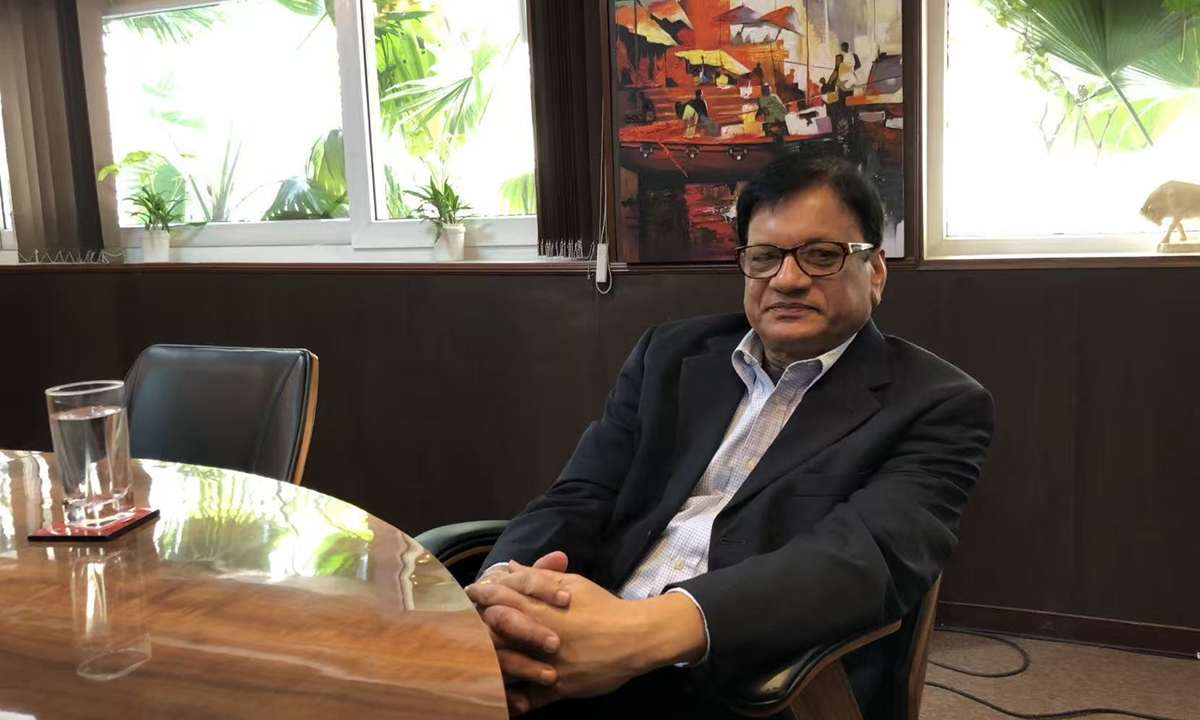
"In whichever sector the complementary strengths of both China and India can be brought together responsibly, they can create value not only for both countries but also for global markets," said Swarup.
India has recently shown signs of easing some long-standing restrictions on trade and investment with China, with Chinese experts saying that the move reflects the country's growing recognition of China's importance to its economic development, and a desire to create a more favorable environment for improving bilateral ties.
There has been a gradual policy adjustment, including easing restrictions on foreign direct investment (FDI) in e-commerce, allowing FDI from companies with Chinese ownership, The Hindu reported on August 1.
With India set to host a BRICS summit this year, Swarup also said that Indian and Chinese companies can work together to promote the interests of developing countries.
India and China are both major economies with significant experience in addressing the challenges of development at scale. Although each country has followed its own development path, there are areas where companies from both nations can contribute meaningfully to broader development across Asia, Africa and other emerging markets, Swarup noted.
There is considerable potential for collaboration in affordable healthcare, digital financial inclusion, renewable energy, agricultural technologies, education technology, infrastructure, supply-chain development and support for small and medium-sized enterprises. These are areas where scalable and affordable solutions can have a significant impact on improving livelihoods, the veteran said.
Partnerships that combine technology, entrepreneurship and long-term investment can help create solutions that are both commercially sustainable and socially impactful. "As two of the largest economies in the Global South, India and China have the opportunity to contribute positively to sustainable development through innovation, responsible investment and constructive commercial engagement," Swarup said.
。

二 | 分支预测单元大量复用了现有Z核心的设计,通过Arm的XML架构描述文件自动生成解码逻辑,寄存器重命名机制为GR16-31范围做了适配,还新增了SVE数据流和FP16、Bfloat16及加密运算的支持。一个线程可以在s390x和Arm两种模式之间切换,切换耗时仅纳秒级别。
IBM在该处理器上实现了完整的AArch64 v9.3架构,支持SVE和SVE2指令,共2792条Arm指令,比Z自身的指令集还多出一倍。IBM在演讲中还打趣说,RISC“精简”一词已经名不副实了。
芯片规格方面,下一代IBM Z处理器采用2nm工艺制造,配备11个核心,基础频率5.7GHz以上,每个核心拥有36MB私有L2缓存,11个核心的L2组合形成432MB虚拟L3,全部核心的L4缓存合并后总容量达3.5GB。
核心采用SMT2同步多线程设计,针对交易和数据库等企业负载做了低延迟优化,还集成了专用片上DPU负责I/O加速,以及AI、压缩、加密和排序加速器。 这些加速单元以Linux平台设备的形式向Arm生态开放,Arm程序调用加密和压缩功能时延迟与Z原生指令接近。 可靠性方面,Z系统延续了99.999999%的可用性目标,涵盖阵列和数据流的错误检查、瞬态故障透明恢复、永久故障的核心热备和在线修复,以及RAIM内存保护。
IBM表示芯片已进入流片阶段,距离量产还有几年时间。 至于IBM为何要做这颗芯片,其实也很简单,目前全球前100大银行中有77家在使用IBM Z大型机,将Arm生态引入Z平台,意味着这些客户可以在不放弃大型机可靠性的前提下,直接运行Arm服务器软件和AI推理负载。
IBM还公布了第二代片上AI推理加速器,配备16个活跃AI核心加1个冗余核心,支持FP4和MXFP4数据类型,峰值算力达上一代的4倍。
加速器集成96GB HBM3e显存,带宽约4TB/s,是当前一代的20倍,通过PCIe Gen6与Z处理器实现低延迟对等互联,支持机密计算,在数据存储、传输和使用三个环节提供保护,包括抗量子密码。
Current article:http://w6bjc3g.nenyaogecebenliexi.shop/list_ej8/ist0ml.html
Published on:22:35:06
栏目相关
- 1999元 明基推出ScreenBar Max双屏全景灯:专为双显示器场景设计
- 江苏体育局:苏超决赛在南京奥体进行,未来会和各市共同办好联赛
- Olympic president Thomas Bach urged by IOC members to extend term limit and seek 4 more years
- 存储界的大满贯!中科曙光斩获四大市场第一:AI连续三年领跑
- 沈腾《龙餐馆》13天票房破15亿 进入年度前五
- 韩国瑜开轰卓荣泰,郭正亮:终于看清面对的是“流氓集团”
- 《关于做好长期护理保险支付管理工作的指导意见》的政策解读
- 孙雯:中国女足面临诸多挑战 希望球迷长久陪伴
- Transcript: Nikki Haley on "Face the Nation," September 3, 2023
- 足球报:陕西联合整体运营情况良好,高层称有信心保级成功
- 【循足迹看变化】沧州:向盐碱地要粮仓 旱碱麦香铺富裕路
- 金融监管总局:对恒大人寿保险有限公司吊销业务许可证,金融监管总局:对恒大人寿保险有限公司吊销业务许可证
热门排行
- 汇丰香港存量投资客户补签声明书,仅适用于投资服务客户
- 50国发表反俄声明,美国未参与!中方最新发声:在乌克兰问题上的立场客观公正、一以贯之,敦促当事方推动局势降温
- 6 killed in floods in Indonesia
- 天津河西区通告:13日起查验72小时核酸证明!涉及这些人员→_检测_疫情
- 1套豪宅曾卖1.3亿元!40岁郜林当经理:工资只够油钱 但我毫不在乎
- 王欣解释了为什么“厕所山”这个名字来自刘德华的歌
- 央行公布7月份金融市场运行情况
- 市场监管总局公布六起经营者集中审查助力整治“内卷式”竞争典型案例
- “杰出但不突出”?为什么选他接班李显龙
- Qatar Airways CEO will step down after nearly 3 decades leading carrier
- 从“量身定制”的新场景 看未来产业发展密码,从“量身定制”的新场景 看未来产业发展密码
- 美国内华达州里诺市火情最新披露:凶猛火势已造成6人受伤,迫使约4.2万名当地居民紧急撤离,另有4.5万人处于撤离警告区